
Ingredient Library
Ingredient Library for Men's Supplements
This library explains the ingredients most often printed on men's supplement labels in Indonesia, from zinc and B-vitamins to saw palmetto and maca. Each entry covers what the ingredient is, which products tend to include it, and what to look for on a panel. Nothing here is medical advice, and no entry claims that an ingredient treats a condition.
How to read an ingredient panelHow to read an ingredient panel
Three habits do most of the work when you compare vitamins and minerals for men. Each one takes under a minute and changes what you notice the second time you look.
Amount per serving
A label can list a nutrient prominently and still deliver a modest amount per serving. Read the number beside the name, then check how many tablets or capsules make one serving.
The form listed
Magnesium citrate, oxide, and glycinate are different presentations of the same mineral. The form tells you how the ingredient was prepared and is worth noting when you compare two panels side by side.
Blend weights
When several botanicals share a single combined weight, the panel does not separate them. Note that before you compare one product's figure against another's disclosed amount.
Next steps
Ingredient entries
The entries below are the ingredients that turn up most often on men's vitamin formulas sold in Indonesia. Pick the two or three you actually see on the bottle in front of you.

Zinc
Zinc appears on a large share of men's daily formulas, usually in the multivitamin and mineral group. It is a mineral with a role in normal immune function and is one of the nutrients most commonly paired with vitamin B6 on men's labels. Amounts per serving vary widely between products, so compare the panel figure rather than the ingredient name. If you already take a multivitamin, check for overlap before adding a standalone zinc product.

Magnesium
Magnesium turns up in formulas aimed at everyday wellness and in blends alongside zinc. It is often listed as magnesium citrate, oxide, or glycinate, and the form is worth noting because it affects how the mineral is presented on the label. Multivitamins usually include a modest amount; standalone magnesium products carry more. Read the serving size carefully, because some products suggest two tablets per serving rather than one.
B-vitamins and B-complex
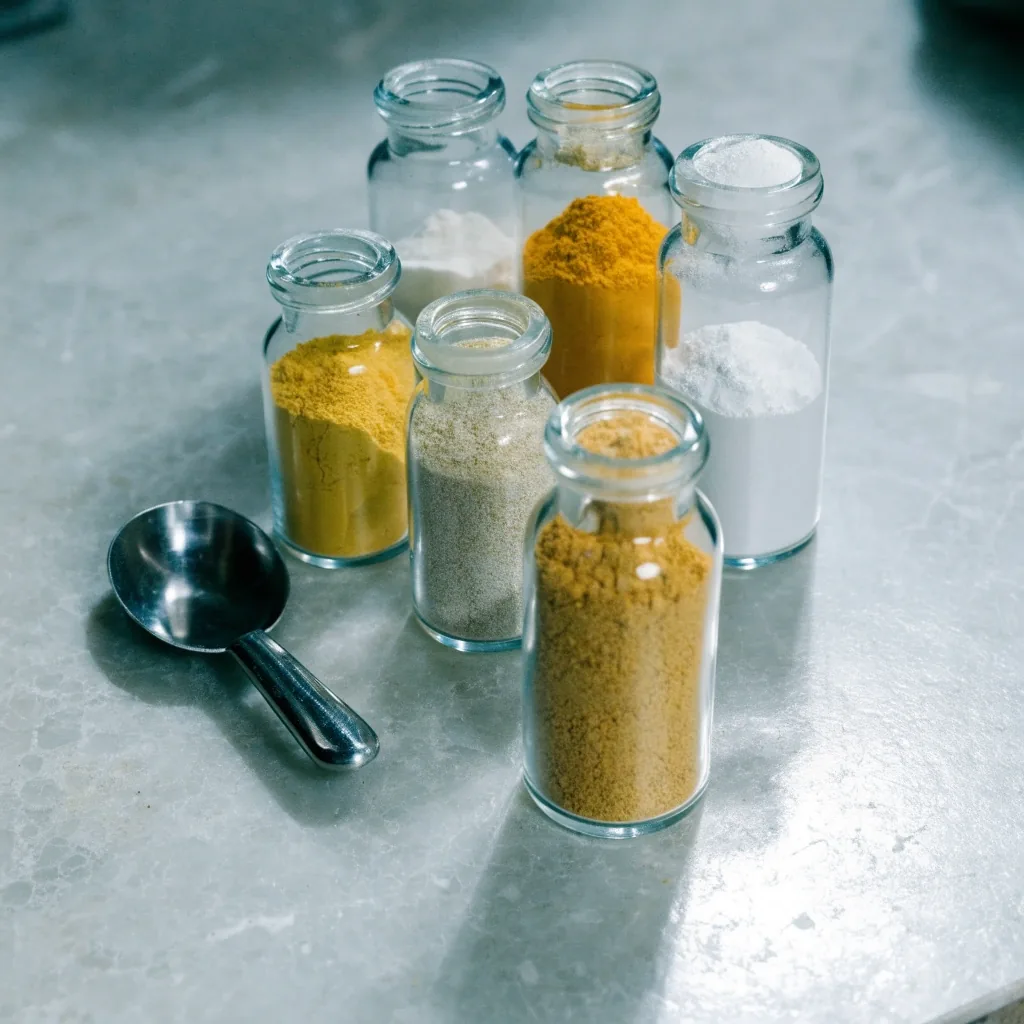
B-vitamins are the backbone of most energy and endurance formulas. GNC Mega Men Sport, for instance, shows higher-dose B vitamins including B1, B2, and B6 on its formula page. A B-complex product gathers them into a single panel, which makes it easier to see how much of each one a serving provides. If your diet already covers B-vitamins well, a broad multivitamin may be sufficient on its own.

Vitamin D
Vitamin D shows up in general men's formulas and in age-specific multivitamins, often in higher amounts in products aimed at older adults. It is commonly listed in international units rather than milligrams, which trips people up when comparing panels. If you spend most of your working day indoors, this is one of the nutrients worth checking on whatever formula you are considering.
Continue the ledger
Botanical extracts and seed ingredients
The botanicals below sit on the labels of natural capsules for strength and vitality, and on many of the popular products for men in retailer assortments. Treat each name individually rather than reading the blend as one item.
Saw palmetto
Saw palmetto is the named botanical in GNC Men's Ultra Saw Palmetto Formula, a 120-tablet product listed in Guardian Indonesia's men's health category. It is a palm extract and appears in capsule and tablet formats both. On a panel, look at whether the amount is listed per ingredient or folded into a blend weight. Products built around a single botanical are the simplest way to read this ingredient clearly.

Maca, ginkgo biloba, and tribulus terrestris
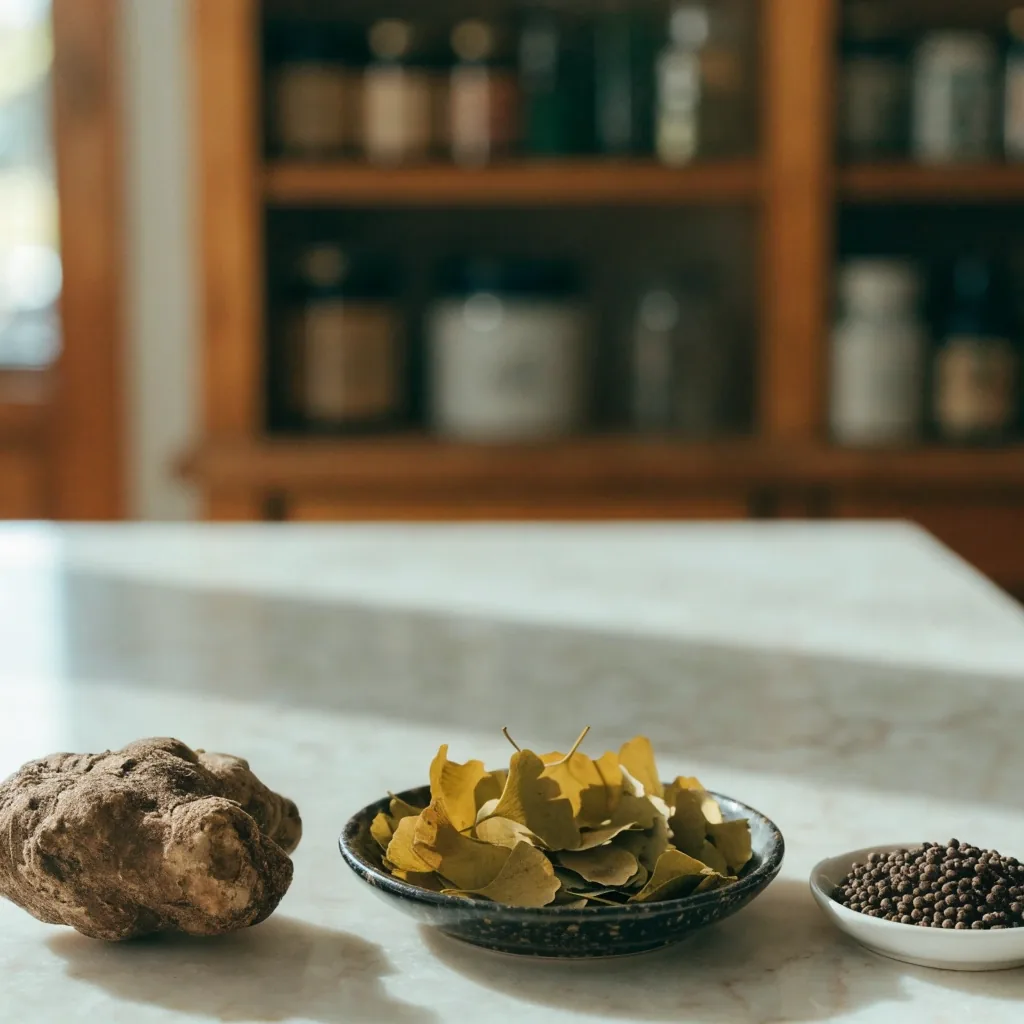
These three appear together in endurance-oriented products. Crystal Star Male Performance Booster, a 60-capsule herbal supplement, names all three in its ingredient callout and is positioned around energy and endurance. Maca is a root, ginkgo biloba is a leaf extract, and tribulus terrestris is a plant extract. When several botanicals are stacked in one capsule, read each name individually rather than treating the blend as a single item.
That habit matters most in this group, because a stacked capsule can list five or six plant names and still keep every amount inside one combined figure.
Ashwagandha and adaptogen-type botanicals
Ashwagandha has become common in men's daily formulas, and published editorial roundups of men's multivitamins now routinely include it alongside more conventional nutrients. It is usually listed as a root extract with the extract ratio printed on the panel. As with any botanical, the amount per serving matters more than the fact that the name appears. If a formula lists several extracts at once, check whether their amounts are disclosed.
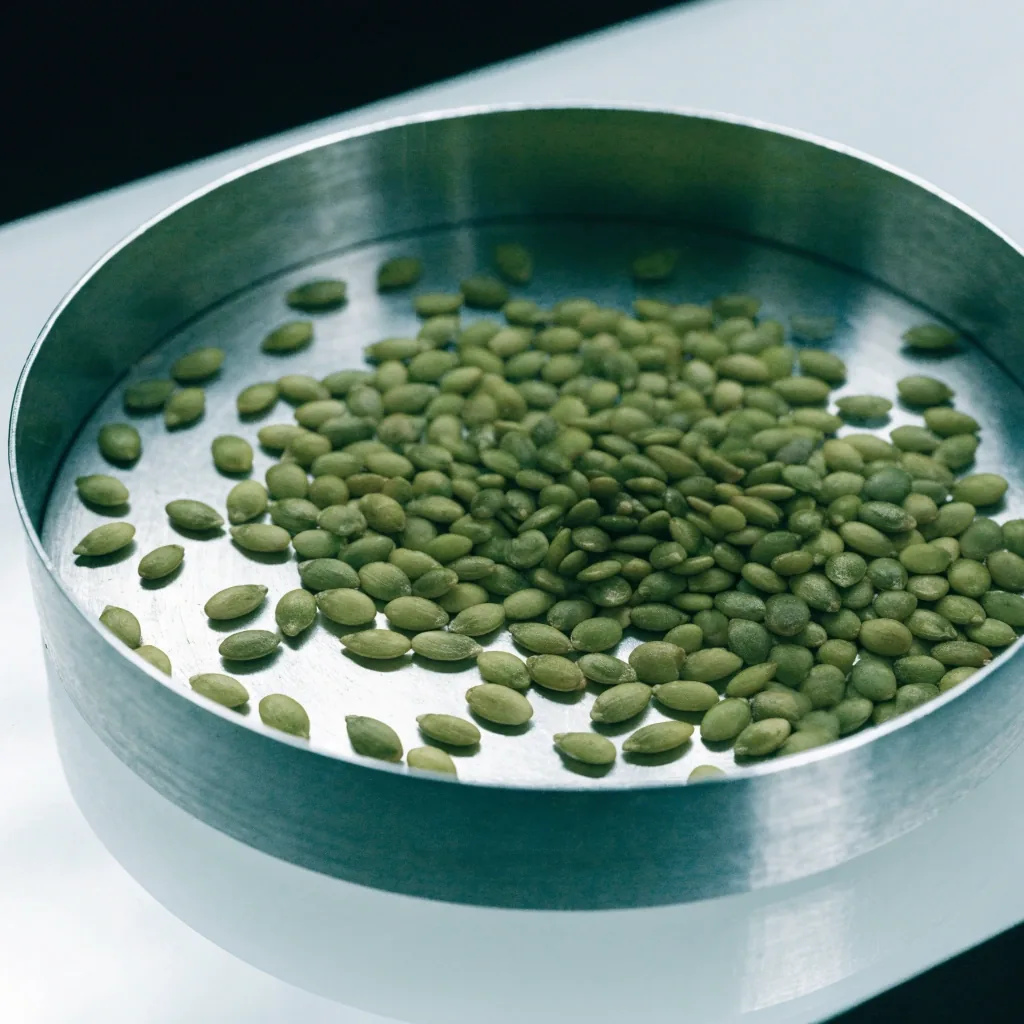
Pumpkin seed and other seed extracts
Pumpkin seed extract appears in men's formulas and in roundups of recommended multivitamins. It is often grouped with saw palmetto or other botanicals rather than sold alone. The panel usually shows it in milligrams per serving, and the extract concentration varies between manufacturers. Seed extracts tend to sit in herbal capsules rather than in compressed multivitamin tablets.
Because the concentration differs by maker, two products can print the same milligram figure and still be built from different starting material. The panel figure is the only number you can compare directly, so start there.
Wide-coverage ingredients and the two add-ons
Some names appear in broad multi-ingredient products rather than in focused formulas. They signal wide coverage, and they are also the entries where reading the panel carefully pays off most.
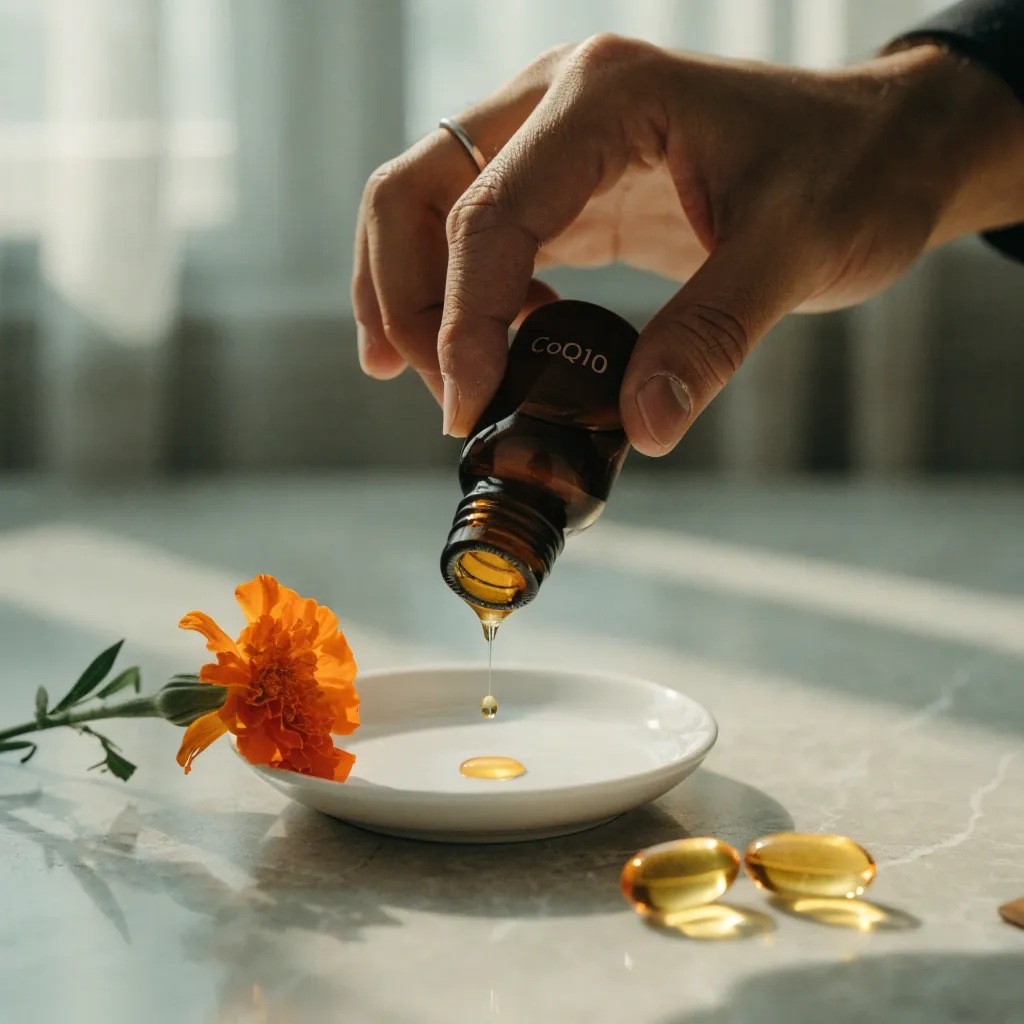
CoQ10 and lutein
Both are typically listed in milligrams. Their presence usually signals that a formula is aiming at wide coverage rather than a single benefit. Because they appear in small amounts, read the panel carefully instead of assuming the names imply a meaningful dose.
Spirulina
Spirulina is often included as a wholefood blend component rather than a purified extract, so it rarely carries its own milligram figure. Treat it as part of a broader blend and look for the disclosed amounts of the ingredients beside it.
Fish oil
Fish oil is usually described by its EPA and DHA content rather than by total oil weight, so the number to compare is the fatty acid figure. Both are also sold as standalone products, which is often the more practical route if you want a meaningful amount.
Compare: EPA + DHA, not total oil weight
Probiotics
Probiotics are listed by strain and by colony-forming units. Like fish oil, they are also sold separately, and that is often the more practical route when you want a specific strain or a larger count than a daily multivitamin carries.
Compare: strain name and count, not blend size
Labels for wide-coverage products tend to be longer. Read the two or three entries that matter to you, then check the serving size once more.
Herbal capsule products beyond the big names
Retail shelves carry herbal men's products that receive less attention than the major brands. Seaquill Herbal Mantix is a 60-capsule herbal supplement listed among vitality and herbal formulas for men in Guardian Indonesia's assortment. Nutrimax Prost Care is a 30-serving men's wellness item from a brand with several products in the same retail category. If an ingredient profile is short on the listing, check the manufacturer's own material before buying.
Browse the Product CatalogHow to use this library
Pick the two or three ingredients you actually see on the bottle in front of you, and read those entries. Then open the product panel again. You will usually spot at least one thing you missed the first time, whether that is a serving size of two tablets or a blend weight hiding individual amounts. That is the point of the exercise.
A men's daily formula usually carries a dozen or more names. Two ingredients you can actually compare will tell you more than fifteen you skim past.
Questions we hear about ingredient labels
01 Does a longer ingredient list mean better coverage?
A long list tells you how many names a maker chose to include, not how much of each one a serving carries. Two panels of similar length can differ a lot in the amounts beside each name. Read the figure next to the ingredient you came for, and check whether the rest sit in a blend weight.
02 Should I take a standalone mineral or a multivitamin?
A broad multivitamin covers many names at modest amounts and suits a general daily habit. A standalone product usually carries more of one mineral or vitamin. If you already take a multivitamin, compare the two panels first so you can see where they overlap before adding anything.
03 Why do botanical amounts often sit inside a blend weight?
Blends are a common way to present several plant extracts on one line. The panel then shows a single combined figure, which does not tell you how much of each extract is inside. Products built around one named botanical, or panels that disclose each amount separately, are easier to read and easier to compare.
04 Is this library medical guidance?
No. These entries are product-informational only: what an ingredient is, where it tends to appear, and what to check on a panel. They are not a diagnosis, a treatment plan, or a dosage recommendation. If you take prescription medicine, are managing a health condition, or are unsure whether a product fits your routine, speak with a qualified professional before changing anything.
Healthy lifestyle products
Start with the bottle in front of you
The library works best as a reference beside a product panel: read one entry, look back at the label, then read the next. When you are ready to compare actual products, the catalog lists the men's vitamin formulas and herbal capsules we carry across Jakarta, and the buying guide walks through how to weigh two panels against each other.
Ask about a specific ingredient
Send us the name printed on the label and we will point you to the library entry that covers it. Office hours are Monday to Friday, 09:00–18:00.